How to Get Your Business Seen Online
Being visible online decides whether new customers find you. This article explains what it takes to show up in search. It starts with a Google Business Profile. It also introduces a tool built to help.
Why Visibility Comes First
Making your business easy to find is the main goal. Without visibility, reaching new customers becomes a real struggle. If you are just getting started, read our guide on how to start a small business first.
We All Search the Same Way
When we need something, we do the same thing. It could be a place to eat or a service provider. Either way, we open Google. Most people have seen the business card that pops up in the results.
The Directory Google Built
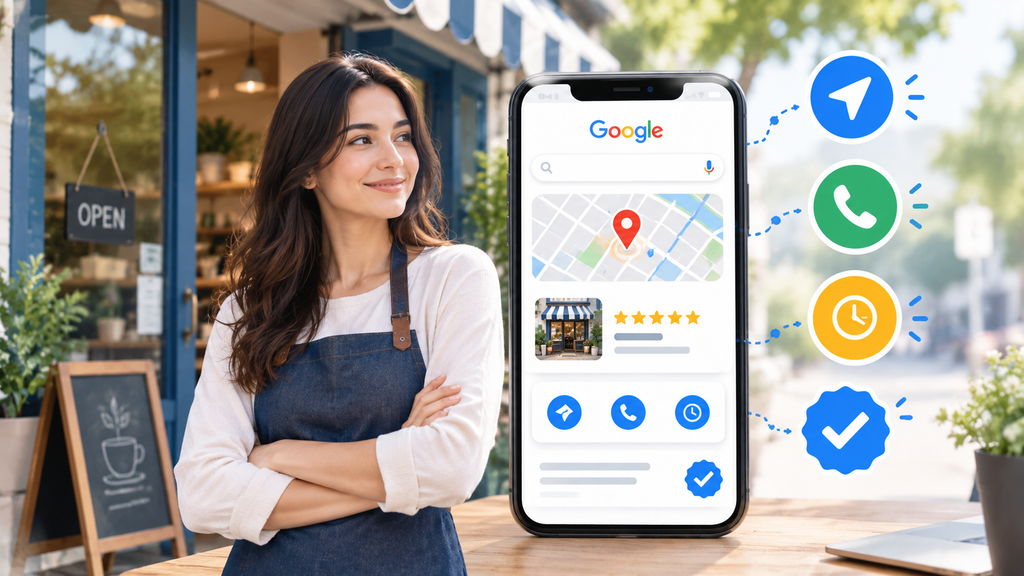
Search for any business on a laptop or phone. A business card takes over the screen. This is Google’s built-in directory. Every customer-facing business can claim a spot there through a Google Business Profile.
Everyday Uses of a Google Business Profile
Most people have used it before. They dial a number, get directions, or check business hours. As a result, it sits at the center of your digital footprint. That is why having a profile matters so much. It is the first place people look.
What Determines Placement
There is a catch, though. Google does not rank businesses randomly. Its system scans for several signals. First, it checks whether a profile exists at all.
Signals Beyond the Basics
After that, Google weighs other factors. These include how many reviews you have and how strong your on-page SEO is. They also include your backlink count. Finally, Google looks at user behavior on your listing. Clicks for directions and taps to call both count.
Citations as a Trust Signal
A citation is any other place online where your business info appears. For example, a Facebook listing with your address is a citation. The more citations Google finds, the better. Even so, they must all show the same info. Then your business ranks higher.
First Step: Build Your Google Business Profile
First, get the profile up and running. However, there is a second layer: verification. It unlocks the real value. It is also more involved than most people expect.
Navigating Verification
Verification proves to Google that your business is legitimate. Unfortunately, it is rarely quick. Google usually mails a postcard, and delivery can drag on. Because we are a certified partner agency, we handle this step for businesses.
Features That Open Up
Verification switches on several features. You can reply to customer reviews. You can also answer questions people post. In addition, you can lock your business info against edits. None of this is available before verification.
The Payoff in Numbers
A verified Google Business Profile brings clear benefits. Studies show that verified listings bring in seven times the traffic. They convert to sales 50% more often. They also draw 70% more visits overall.
Second Step: Spread Your Listings
Next, spread your presence across as many directory sites as possible. This is another factor in Google’s ranking formula.
A Tool Built for This
Our platform, Feature My Business, fills this gap. First, upload your details once. Then use the dashboard to manage all your listings from one spot.
Tracking Profile Strength
The tool scores how complete your profile is. A fuller profile sends a clearer message to Google. It shows that a legitimate operation stands behind it.
Consolidated Feedback
The tool also gathers reviews from Facebook and Google in one place. It shows your blended rating. It also flags whether you are responding to reviews. In addition, a word-frequency breakdown reveals common customer sentiment.
More Data, One Dashboard
The dashboard pulls in extra stats too. These include direction requests, site visits, and phone calls. The data comes straight from Facebook and Google activity.
Listings Generated Automatically
This is the core feature. Once you upload your business profile, the tool creates listings automatically. It does this across a broad set of directory platforms.
Cross-Platform Connections
The tool links to your Facebook page. That page then feeds an Instagram location tag. It also reaches mapping apps, Apple Maps, and Uber. On top of that, it covers various general directory publishers.
The Real Point of Directory Listings
This is not about people browsing those directories on purpose. Instead, it is about what happens when someone Googles your business. The crawler spots your profile. Moreover, it sees your footprint across roughly 27 other platforms.
Reading as a “Real” Business
This consistency tells Google your business carries weight. Consequently, it pushes you toward the top of relevant search results.
Edging Out the Competition
Being findable is only part of the goal. You also want the fullest web presence possible. That way, you outshine your rivals. Take someone typing “lawyer near me.” A verified profile with dozens of matching directory listings signals prominence. Google rewards that with a higher ranking.
To Wrap It Up
In short, follow three steps. First, get your Google Business Profile live. Second, push it through verification. Finally, build as many directory listings as you can.
