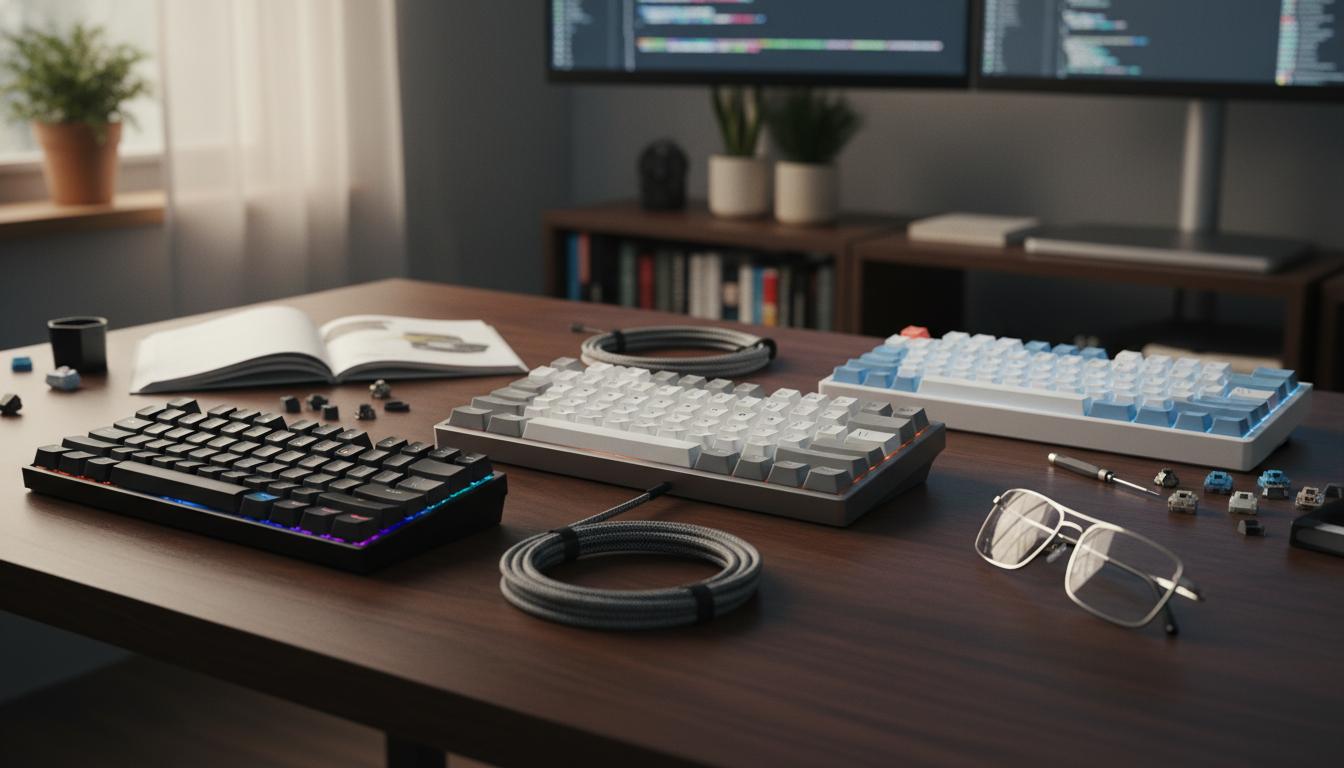
7 Best Budget-Friendly Mechanical Keyboards for Software Developers in 2024
Let’s be honest. If you spend eight hours a day staring at VS Code or terminal windows, your keyboard is your most important tool. It’s the bridge between your thoughts and the machine. Yet, so many coders are still stuck using mushy, membrane laptop keys that feel like typing on a wet sponge. If you’re looking for the best budget-friendly mechanical keyboards for software developers, you’ve come to the right place. You don’t need to drop $300 on a custom board to get a premium typing experience.
I’ve spent years testing everything from high-end builds to the cheapest Amazon finds. The good news? The “budget” market has absolutely exploded lately. You can now get features like hot-swappable switches, PBT keycaps, and wireless connectivity for less than the price of a fancy dinner. In this guide, I’m going to break down the top picks that will make your coding sessions faster, more comfortable, and—dare I say—actually fun.
What’s Inside:
Why Software Developers Need a Mechanical Keyboard
As a developer, your hands are your livelihood. A mechanical keyboard isn’t just about the “click-clack” sound. It’s about tactile feedback. When you feel exactly when a keypress registers, you tend to make fewer typos. Over a 10,000-line project, that adds up to a lot of saved time.
Durability is another huge factor. Standard membrane keyboards use rubber domes that wear out and get “sticky” over time. Mechanical switches are rated for 50 million keystrokes or more. Buying one of the best budget-friendly mechanical keyboards for software developers is actually a long-term investment in your productivity.
Finally, there’s the “feel” factor. Coding is hard enough. Why not make the physical act of writing code more enjoyable? A crisp, responsive keyboard can actually make those long debugging sessions a bit more bearable.
Key Features to Look For on a Budget
When you’re shopping for a budget board, you have to be smart. You can’t have everything, but you can get the essentials. Here is what I prioritize when looking for a developer-centric keyboard:
- Hot-Swappable PCB: This is a game-changer. It means you can pull out the switches and replace them without soldering. If a switch breaks or you want to try a different feel, you don’t have to buy a new keyboard.
- Layout Size: Most devs prefer TKL (Tenkeyless) or 75% layouts. They save desk space and keep your mouse closer to your body, which is better for your shoulders.
- Connectivity: Do you need to switch between a Mac and a PC? Look for keyboards with a physical toggle switch.
- Build Quality: Look for “heft.” A keyboard that slides around your desk while you’re typing is a nightmare.
Image Suggestion:
A top-down shot of a clean developer desk setup featuring a 75% mechanical keyboard, a coding IDE on the monitor, and a coffee mug. Alt-text: Best budget-friendly mechanical keyboard for software developers on a clean wooden desk.
The Top 7 Budget Mechanical Keyboards for Developers
1. Keychron C1 / C2 (The Professional’s Choice)
Keychron has become the gold standard for developers. The C1 (TKL) and C2 (Full Size) are their wired, entry-level models. They are incredibly reliable and come with specific keycaps for both Mac and Windows layouts.
I love the C series because it’s no-nonsense. It has a clean, white backlight (or RGB if you want to spend an extra $10) and a solid USB-C connection. It’s the perfect “first” mechanical keyboard for anyone working in a professional environment.
2. Royal Kludge RK61 (The Minimalist King)
If you have a tiny desk or you like the “minimalist” look, the RK61 is legendary. It’s a 60% keyboard, meaning it lacks a function row and arrow keys. Warning: This has a learning curve for devs who use a lot of shortcuts.
However, it’s arguably the most affordable wireless mechanical keyboard that actually works. It supports Bluetooth and can connect to three different devices. It’s a fantastic secondary keyboard for coding on the go.
3. Redragon K552 KUMARA (The Tank)
The Redragon K552 has been a top seller for a decade for a reason. It is built like a tank. It’s loud, it’s heavy, and it’s dirt cheap. If you are on a strict sub-$40 budget, this is your best bet.
The downside? It usually comes with “Blue” switches, which are very clicky. Your coworkers (or your spouse) might hate you. If you pick this up, I recommend the version with “Red” or “Brown” switches for a quieter coding experience.
4. EPOMAKER TH80 Pro (The Enthusiast Pick)
The TH80 Pro is slightly more expensive but offers incredible value. It features a 75% layout (includes arrow keys and function row) and a dedicated volume knob. For some reason, having a physical knob for music or volume is incredibly satisfying while working.
It comes with “Gateron Pro” switches, which are pre-lubed from the factory. This means they feel smooth right out of the box without that scratchy feeling common in cheaper boards.
5. Logitech K835 (The Minimalist Workhorse)
Logitech is a brand we all know. The K835 is their attempt at a budget mechanical board, and they nailed it. It’s a slim, TKL design with an aluminum top plate. It looks very “Apple-esque” and fits perfectly in a modern office.
While it’s not hot-swappable, the build quality is excellent. It’s a “set it and forget it” keyboard for people who just want something that works without fiddling with custom parts.
6. Akko 3068B Plus (The Best Aesthetics)
If you want your desk to look like those aesthetic setups on Instagram, Akko is the way to go. They offer amazing colorways (like the “Black & Gold” or “Prunus Lannesiana”) that come with high-quality PBT keycaps.
PBT keycaps are superior for developers because they don’t get “shiny” or greasy after months of heavy typing. The 3068B is compact, wireless, and feels much more expensive than it is.
7. MageGee Sky87 (The Ultra-Budget Choice)
Are you a student or just starting your first dev job? The MageGee Sky87 is often found for under $30. It’s a basic TKL keyboard with a clean blue-and-white aesthetic.
It doesn’t have the bells and whistles of a Keychron, but it is a massive upgrade over any laptop keyboard. It’s the definition of budget-friendly mechanical keyboards for software developers.
Choosing the Right Switch for Coding
The “switch” is the mechanism under the keycap. For developers, this is the most important choice. Here is a quick breakdown:
- Linear (Red): Smooth and quiet. Great for fast typing, but some people find them too “sensitive” for coding, leading to accidental keypresses.
- Tactile (Brown): The favorite for many devs. There is a small “bump” when the key registers. It’s quiet enough for an office but gives you that physical confirmation that you hit the key.
- Clicky (Blue): Loud and satisfying. These feel great, but they sound like a typewriter. Avoid these if you work in an open-plan office or late at night with family nearby.
Image Suggestion:
A close-up macro shot of mechanical switches (Red, Brown, and Blue) sitting side-by-side. Alt-text: Different types of mechanical keyboard switches for software development.
Ergonomics and Wrist Health
I can’t talk about keyboards without mentioning ergonomics. Mechanical keyboards are generally taller than standard ones. This can cause your wrists to bend upward, which leads to Carpal Tunnel over time.
If you buy one of these keyboards, get a wrist rest. A simple foam or wooden rest will keep your hands level with the keys. Also, try to learn to type with your wrists floating rather than resting them on the desk. Your future self will thank you.
Frequently Asked Questions
Q: Are mechanical keyboards loud?
A: They can be, but they don’t have to be. If you choose “Red” or “Brown” switches, they are barely louder than a standard keyboard. You can also add “O-rings” to dampen the sound even further.
Q: Is it worth getting a wireless keyboard for coding?
A: Wireless is great for a clean desk, but for coding, a wired connection is more reliable. Most budget wireless boards use Bluetooth, which can occasionally have a tiny bit of lag. If you go wireless, make sure it has a 2.4GHz dongle option for the best stability.
Q: What is the best layout for a software developer?
A: Most developers prefer 75% or TKL. These layouts keep the arrow keys and the function row (F1-F12), which are vital for debugging and navigating code, while still being compact.
Conclusion
Finding the best budget-friendly mechanical keyboards for software developers doesn’t have to be a chore. Whether you want the professional reliability of a Keychron, the compact versatility of the RK61, or the premium feel of the EPOMAKER TH80, there is an option out there for every budget.
Stop settling for a subpar typing experience. Your code is worth it, and your hands are too. Pick one of these up, and I promise you’ll never want to go back to a membrane keyboard again. Happy coding!