
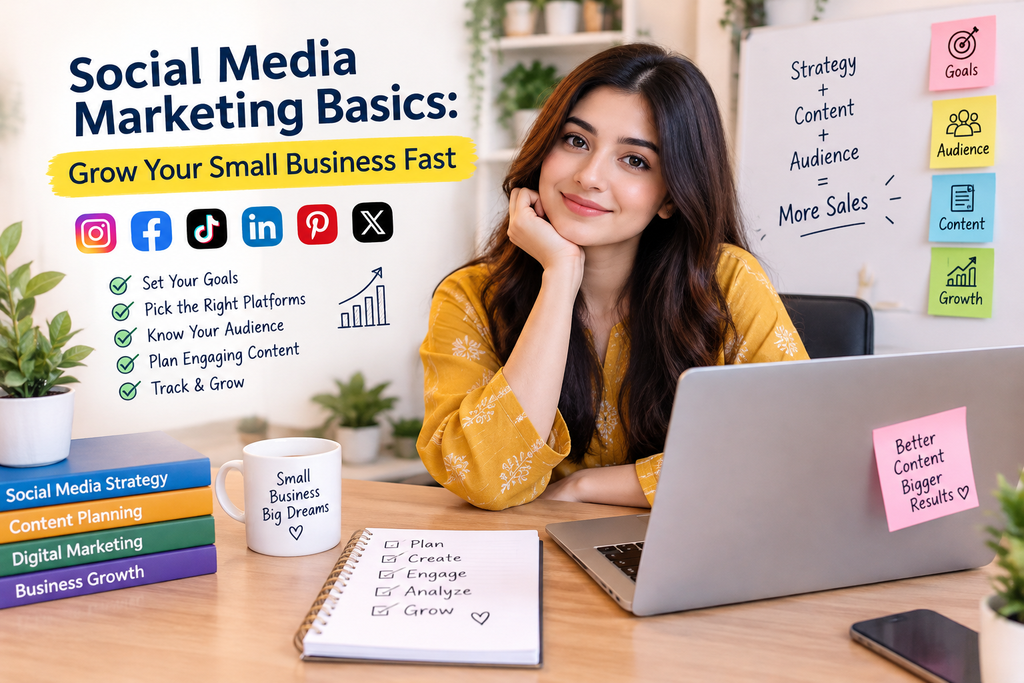
If you run a small business, you already know the problem. There’s never enough time. Posting, replying, and checking numbers all compete with orders, customers, and a hundred other jobs. Still, skipping social media isn’t really an option anymore.
The good news about social media marketing is that you don’t need a big team or a big budget. You need a plan. Here’s a simple one you can start using this week.
Start With the Right Tools
Before anything else, get organized. A free templates kit saves hours of guesswork. This collection comprises 10 templates for audits, personas, calendars, and reports. Some of these are featured in the next set of steps, so please download the kit first before proceeding. For additional resources, explore Hootsuite’s free social media templates and planning resources.
Pick One or Two Goals
What do you actually want from social media? Maybe it’s more awareness. Maybe it’s sales, website visits, or a stronger brand. All of these are fair goals. The trouble starts when you chase all of them at once.
Without a full team, that’s a fast way to burn out. So choose one or two. Begin small. It’s possible to expand as time goes on. To set measurable objectives, review SMART goal-setting principles.”
One such technique would be to group your objectives into short-term and long-term.
Short-Term Objectives
Direct sales and quick leads sit here. Need cash soon? Running a promotion? A focused campaign can deliver fast. But there’s a catch. A small audience only has so many buyers in it, and paid ads get pricier as you scale. Eventually, each sale costs too much.
Long-Term Goals
That’s where brand building comes in. Awareness, engagement, and public sentiment don’t show up on a sales report right away. However, ultimately, they attract many more clients than the campaigns ever could. It is as if they plant rather than pick fruit.
Choose Your Platform
Start with what you already have. Maybe you’ve got followers you haven’t talked to in months. They’re warm. They already know you. Moreover, waking them up is cheaper than finding strangers.
Open the audit template and fill in a tab for each platform you use now. You’ll quickly see where you have traction and where you don’t.
Starting fresh? Next, join your audience where they already hang out.
Know Your Audience
People don’t stick to one platform. The average person has more than eight accounts, each for a different reason. Therefore, you can’t target “a person.” You target a persona: age, gender, location, job, and interests.
Here’s the interesting part. Demographics stay the same everywhere however, interests shift from platform to platform. Picture a 32-year-old woman in San Diego. On LinkedIn, she’s an HR specialist. And On Facebook, she’s in pet groups for her dog. On YouTube, she’s watching tennis lessons.
Now, what do you sell? HR software, organic pet food, and tennis grip tape would each reach her on a different platform. Same woman, three different strategies.
Not sure who your buyer is? A free buyer persona template from HubSpot walks you through it in a few minutes.
What Will You Post
Once you have determined your objectives, target audience, and medium, select an appropriate content form. Some suggestions are:
- Product photos to build awareness
- Surveys to boost engagement
- Live videos to show authority
- PPC ads to generate leads quickly
- Influencer partnerships for quick growth (best with a solid budget)
Study Your Competitors
Still stuck? Look at what’s working for others in your space. Moreover, you probably know your rivals already, but writing it all down helps.
Pick three to five close competitors and record this in a spreadsheet:
- Followers and fans
- How often, and how consistently, they post
- Engagement, like comments and shares
- Virality: shares, repins, and retweets
Use it for ideas. Don’t copy. Every brand is unique, and yours is something that only you can bring to the table.
Develop a Content Schedule
Got your goals, audience, platform, and research? Great. Don’t hit “post” yet. Plan first.
The editorial calendar in the kit keeps your ideas in one place. Do it in installments over the course of several weeks. It is always good to plan ahead because posting is not a frantic activity.
Effective Tips for All Circumstances
- Keep your copy short.
- Use keywords so people can find you.
- Try emojis. They really do help.
- Size your images for each platform.
- Choose original photos over stock.
- Start your message within the first few seconds of your video.
- Include a call to action, except when the only thing you care about is getting viewers’ attention. If so, just pose a question.
Track What Happens
Finally, check your numbers. Every platform has built-in analytics. If you post a lot, or on several platforms, a tool like Hootsuite, Sprout Social, or HubSpot’s free marketing hub keeps everything in one place.
Then use the reporting template to see the full picture. Keep what works. Change what doesn’t.
Final Thoughts on Social Media Marketing
Success comes from the right combination of elements, which include objectives, platforms, audience and measurement. It won’t happen overnight. But with a plan and the free templates, you’ll be ahead of most small businesses. Social media marketing rewards the ones who stay consistent.
