https://www.salesforce.com/ap/small-business/how-to-start-a-small-business
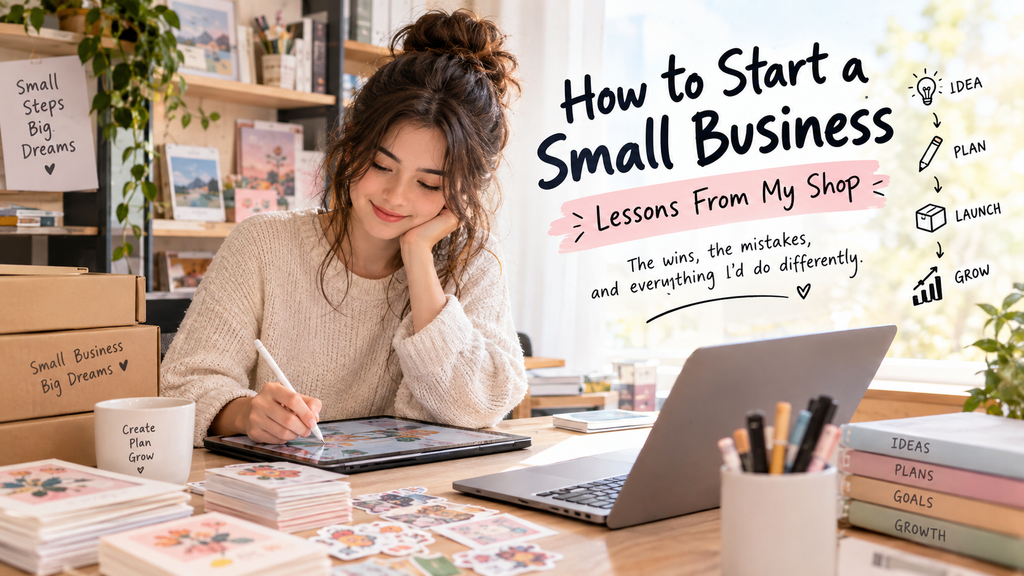
A real story about starting a small business — the wins, the mistakes, and everything I’d do differently.
If you’re anything like me, you’re probably watching a lot of content on YouTube. You’re trying to figure out how to actually get started. You’re also getting inspired by creators packing hundreds of orders on their channels.
I remember wishing I could see more than just the logistics. I wanted to know the mindset and methods people use to stay on track. So, in this piece, I want to share my journey. I’ll walk you through the biggest lessons I learned along the way. Hopefully, this shows you that starting a small business is more possible than it seems.
I’m not an expert, and my shop isn’t the biggest success story out there. Still, I’ve run it for a few years now. Because of that, I hope my mistakes can help you avoid a few of your own.
My Background
My journey really began with a journaling account on Instagram in high school. At first, I had no intention of selling anything. I was just creating for fun. Eventually, though, I gained a following, and I started taking it more seriously.
However, I made one big mistake early on. I didn’t have a clear picture of where the account was headed. As a result, even after growing to 28,000 followers over two years, I struggled to stay motivated. I couldn’t see the purpose behind all that effort.
What I Learned Before Starting a Small Business
From this, I took away two key lessons. First, consistency actually works. Not just because it pleases the algorithm — but because posting regularly builds a skill. Over time, that skill shapes your own unique style and voice. In my case, that style is what helped grow my following.
Second, you need a big-picture vision, even if you’re just getting started for fun. Everybody’s interests change eventually. So, without a clear “why,” it becomes much harder to keep going when things get tough.
Stage 1: Ideation
Eventually, the idea of opening my own shop hit me. Since I already had the following, it felt possible. So, I got planning.
Unfortunately, I spent over a year just planning and thinking, with zero action. Looking back, I learned that there’s only so much planning you can do. You’ll learn far more by simply starting and figuring things out along the way. That said, this only applies if you’re not the type to overthink and freeze. Balance matters — too much planning or too much action can both hold you back.
Stage 2: Action
Eventually, I started designing. I saved up and bought an iPad Pro, Apple Pencil, and Procreate. Then, I got to work.
Quickly, though, I realized something. My journal-spread style didn’t translate directly to sticker sheets and art prints. So, I was less than satisfied with my early designs.
Still, I kept going. One day, my friends asked to see my progress. I hesitantly showed them, and their reactions were mixed — some were excited, others were quiet. I don’t blame them; we were all just tired students. But because I cared so much, that quiet reaction still affected me.
From this, I learned something important: don’t share your goals before you execute them. This can sound harsh, but it’s how I work best. In fact, it’s likely why my journaling account grew so quickly — barely anyone knew about it besides my sister. Sharing with strangers online, rather than people I knew, made it easier to post freely and grow organically.
Of course, this depends on your personality. Some people thrive on accountability from friends and family. For me, though, staying quiet about my plans — including this YouTube channel, which only my boyfriend knew about — worked best.
Stage 3: Time Crunch
Next came the most important lesson of all: setting a hard deadline. No matter how “ready” my products were, I promised myself I’d launch anyway.
Why? Because I was tired of wanting something so badly yet never starting. Since I wanted to launch before college application season, that gave me about six weeks. So, after school and extracurriculars each day, I got straight to work — designing, researching manufacturers, and sourcing materials and packaging.
This is where I learned the real power of a deadline — one that actually means something to you. So, if you haven’t already, set yours. Make a plan, then get to work. A real deadline creates real pressure, and that pressure gets things done.
Stage 4: Opening
Finally, launch day arrived. I announced my shop on my main account, gaining around 700 interested followers that same day. A few days later, after showcasing my designs, I officially opened.
Honestly, I expected huge results — like the creators I saw online packing hundreds of orders. Instead, I got about 30 orders and $600 in sales. I was grateful, of course, but also a little disappointed. That disappointment pushed me to ask: what could I improve?
Practical Tips for Starting a Small Business
Looking back, I made plenty of mistakes worth learning from.
First, keep your expectations moderate. Big launches take time to build.
Second, offer cheaper shipping options. At first, I only offered tracked shipping — $8.50 international, $3.50 domestic. However, my products cost far less than that. So, adding untracked letter mail (as low as $1–2) made a huge difference for affordability.
Third, launch with more products. My original two products capped orders at $18.50. Now, with a bigger catalog, that ceiling is over $100. Since packing takes real time either way, higher order totals make the effort far more worthwhile.
Fourth, choose your platform carefully. I built my own website instead of using Etsy, wanting to grow my personal brand. Now that I’m busier with university, though, I sometimes wonder if Etsy’s built-in search traffic would’ve helped more — despite its cut of your revenue.
Fifth, streamline your packaging. Cute packaging is tempting, but practicality matters more as you scale. Otherwise, packing eats into time you need for other responsibilities.
Finally, consider digital products. They remove the need for inventory or packing altogether — a huge time-saver, especially as a student.
Stage 5: Growth
After launch, the next shop update proved difficult. Between packing orders and processing my own disappointment, staying consistent became harder. I put pressure on myself to make each new product “better,” and that pressure made it hard to create at all.
Still, I learned three lasting lessons.
First, keep a content calendar. Creating posts last-minute leads to burnout fast. Batching content ahead of time keeps you consistent without the stress.
Second, choose your primary platform early. In hindsight, I wish I’d focused on YouTube from the start. Unlike Instagram, where you must post constantly to stay visible, YouTube content can get discovered years later. That makes it far more sustainable for a busy schedule.
Third, detach from the outcome. Whether a launch performs well or poorly, don’t dwell on it. Learn from the data, then move forward.
Final Thoughts on Starting a Small Business
Today, I’m a sophomore studying computer science and art at Carnegie Mellon University. I’m still building my shop — just more consistently through YouTube now.
This is only my second piece here, so I’m still learning as I go. Still, I’m excited to build a community around starting a small business, productivity, and student life. If that sounds interesting, feel free to follow along — thanks for reading!
